
Location
5205 Courthouse Rd, Spotsylvania Courthouse, VA
(540) 895-7330
A missing tooth doesn’t just leave a space, it shifts your bite, wears down the teeth around it, and slowly changes the shape of your jaw. Dr. Michael Clark has placed and restored implants for years, pairing hands-on surgical experience with a straightforward way of explaining what your mouth actually needs. Here’s what a dental implant can do for you.


The crown is shaped and shaded to match the rest of your smile, and because the implant is anchored in bone rather than resting on the gum, it moves the way a natural tooth does. Most patients forget which tooth was ever missing.
When a gap is left unfilled, nearby teeth tend to drift toward the open space, throwing off your bite. An implant holds its own position permanently, which keeps everything else where it belongs.
Bone needs the pressure of daily use to stay dense. Without a tooth root there, the jawbone in that area gradually wears away. A titanium implant post replaces that root and gives the bone something to hold onto.
Cared for with regular brushing, flossing, and checkups, an implant post can last for decades. There’s no adhesive, no soaking overnight, and no special routine, just the same habits you already use on your natural teeth.
A dental implant has three parts working together. First, a small titanium post is placed into the jawbone, taking the place of the tooth root that’s no longer there. Once that post has bonded with the bone, a connector piece called an abutment attaches to it. Finally, Dr. Clark secures a custom crown, the visible part shaped like a tooth.
Titanium is used because bone naturally fuses to it, a process called osseointegration. That fusion is what makes an implant stable enough to bite into an apple or chew ice without a second thought, something bridges and dentures can’t always promise.
Tooth loss from decay, gum disease, or an injury can affect one tooth or several. Whether you need a single replacement or support for a fuller restoration, an implant can usually be sized to the situation rather than the other way around.
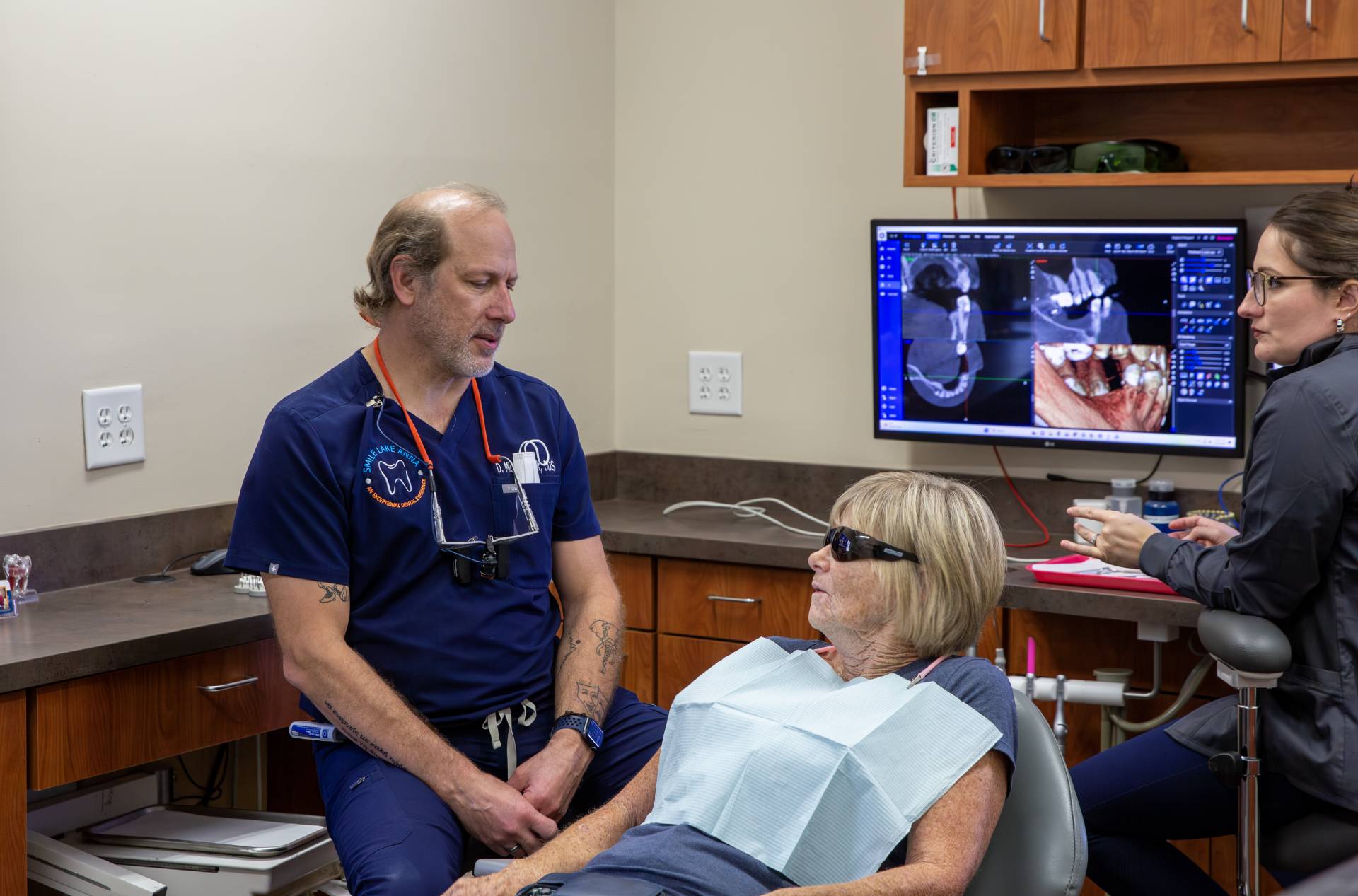
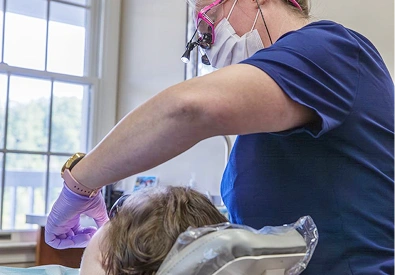
Not every mouth is ready for an implant on day one, and that’s completely normal. Gum disease or bone loss can leave the area too soft to support a post. In that case, Dr. Clark may recommend a bone graft or soft tissue graft first, giving your jaw the strength it needs before moving forward. It adds a step, not a setback.
We take a close look at your teeth, gums, and jawbone to confirm you’re a good candidate, and answer your questions before anything is scheduled.
If a graft or extraction is needed first, we take care of that and let the area heal properly.
The titanium post is set into the jawbone under local anesthesia. Most patients describe the recovery as mild, closer to a tooth extraction than surgery.
Over the following weeks, the bone fuses to the post. A temporary crown can cover the gap while this happens.
Once healed, the abutment and custom crown are placed, and your new tooth is ready to use.

A toothache or a broken tooth is rarely the whole story. It’s usually a symptom of something else, whether that’s diet, stress, or grinding your teeth at night. In this video, Dr. Michael Clark explains why he looks past the immediate problem to find what’s actually causing it, and why he treats the person, not just the tooth.
Dr. Clark’s approach to implants is the same as his approach to every treatment: look past the obvious problem to understand what’s actually going on, then walk you through your options without pressure or dental jargon. If a graft is needed before your implant, he’ll explain why. If a simpler path exists, he’ll say so.
A missing tooth affects more than what shows when you smile. It changes your bite, your comfort, and eventually your jawbone’s shape. A dental implant addresses all of that at once, with a result built to hold up for years rather than months. If you’re ready to talk through whether an implant is the right fit for you, our team at our Spotsylvania office is ready to walk you through it, starting with a straightforward consultation and no pressure to decide on the spot.
With regular brushing, flossing, and dental checkups, the titanium implant post can last decades, often a lifetime. The crown on top typically lasts 15 to 20 years before it may need to be replaced due to normal wear.
The post is placed under local anesthesia, so you shouldn't feel pain during the procedure. Afterward, most patients report mild soreness for a few days, manageable with over-the-counter or prescribed pain medication, and comparable to recovering from a tooth extraction.
Implants typically run between $3,000 and $5,000 per tooth, depending on the type of implant, whether additional procedures like bone grafting are needed, and how many teeth are being replaced. A consultation is the best way to get an accurate estimate for your situation.
Most healthy adults with sufficient jawbone density and healthy gums are candidates. If bone loss or gum disease has weakened the area, a bone graft or gum treatment beforehand can often make you eligible.
From initial placement to final crown, the process usually spans a few months, since the post needs time to fuse with the jawbone before the crown is attached. Cases that require prep work like grafting take longer.
Many dental insurance plans cover at least part of the cost, since implants are often considered medically necessary. Coverage varies by provider and plan, so it's worth calling your insurer directly, and our office can also walk you through FSA, HSA, and payment plan options.
Yes. The crown is custom-shaded and shaped to match your surrounding teeth, and because the post fuses with your jawbone, it functions like a natural tooth root when you bite down.
Neighboring teeth can shift into the open space, your bite can change, and the jawbone beneath the gap gradually loses density without a tooth root to support it. Replacing the tooth early helps prevent all three of those complications.