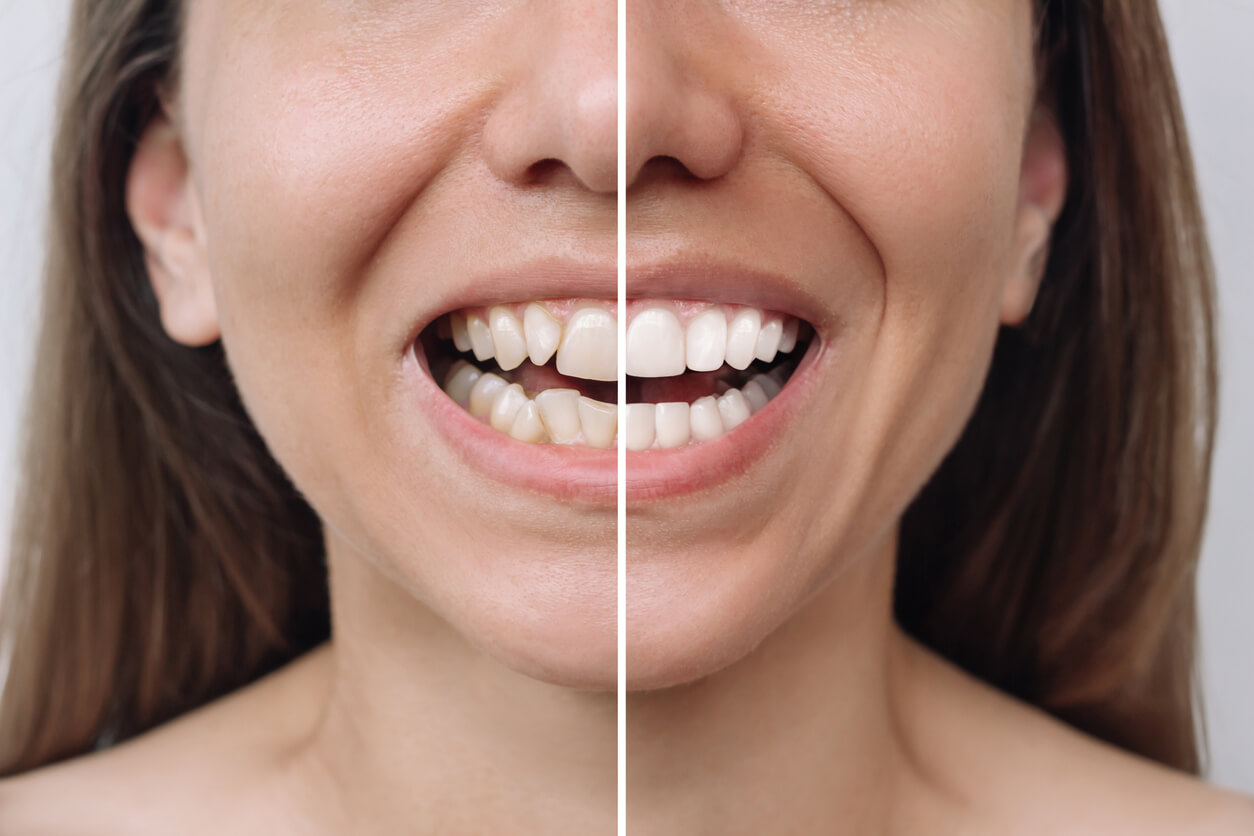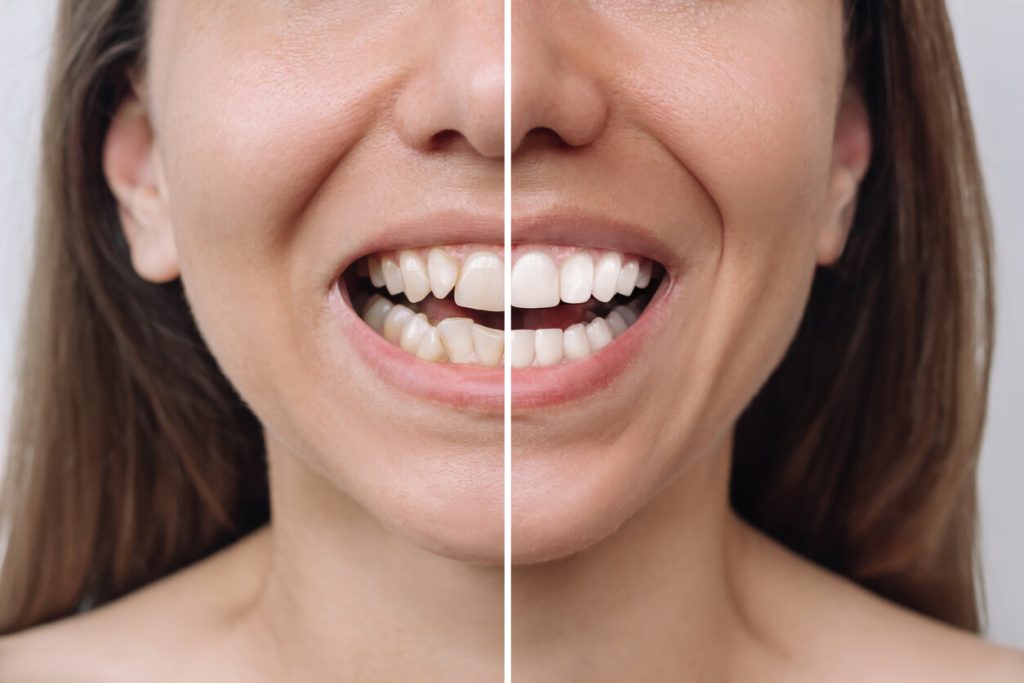
If you have crooked teeth, you may want a straighter-looking smile without the long commitment of traditional braces. Many people ask, “Can you put veneers on crooked teeth, or is orthodontic treatment required first?” Veneers are a popular cosmetic solution for quickly improving minor crooked teeth and other dental imperfections.
This article answers common questions about choosing veneers for slightly or mildly crooked teeth. You’ll learn how dental veneers work, who is a suitable candidate, and what results to expect if your teeth are crooked.
What Are Dental Veneers?
Dental veneers are custom-made, thin shells, crafted from porcelain or composite resin, that are bonded to the front surface of your natural teeth. These thin shells are designed to provide a natural appearance while masking flaws such as small gaps, stains, or minor crookedness. Porcelain veneers, in particular, are durable and stain-resistant, while composite veneers can be a cost-effective, minimally invasive option for many patients.
Can You Put Veneers on Crooked Teeth?
Yes, veneers can be placed on teeth that are slightly or mildly crooked. They provide a straighter-looking smile by covering visible imperfections. However, if your misalignment is significant and affects your bite or overall oral health, orthodontic treatment may be needed before veneers are considered.
Who Is a Suitable Candidate for Veneers on Crooked Teeth?
Not everyone with crooked teeth is an ideal match for veneers, so evaluation is crucial before proceeding. Several factors determine candidacy for this cosmetic solution, and it’s important to understand these points to make an informed choice. Below are the key attributes your dentist considers in a veneer assessment.
- Healthy Teeth and Gums: Candidates should have overall oral health, minimal decay, and healthy tissue. This foundation supports successful veneer placement and good long-term results.
- Minor Crookedness or Cosmetic Imperfections: Slightly misaligned, chipped, or gapped teeth are ideal for cosmetic veneers. Severe misalignments often require orthodontic treatment before veneers can be considered.
- Desire for Cosmetic Improvement: If your main goal is a straighter and more attractive smile rather than correcting bite function, veneers offer a natural appearance quickly.
- No Need for Extensive Orthodontics: If your dental imperfections do not demand comprehensive orthodontic intervention, veneers may present a time-efficient solution.
If you’re curious about you can get veneers on crooked teeth, the best approach is to consult with an experienced dentist or cosmetic dentist who can evaluate your oral health, bite issues, and desired outcomes.
How Do Veneers Work to Correct Crooked Teeth?
If you’re considering veneers, it’s valuable to understand how they address both aesthetics and function. The approach is tailored to match your needs while enhancing your smile’s cosmetic appeal. Here’s what you can expect during each step of the process.
- Consultation and Candidacy Assessment: Your dentist reviews your teeth, discusses your cosmetic goals, and ensures there are no underlying oral health problems. This phase includes a review of your bite and suitability for veneers versus orthodontic treatment.
- Minimal Enamel Removal: To prepare for custom veneers, a thin layer of enamel from the tooth surface is removed. This step allows the veneer to fit correctly and creates a smooth bonding area.
- Creation of Custom Veneers: Using advanced technology and new materials, your dental team crafts veneers with color and shape matched to your natural teeth. Both porcelain and composite resin options are designed for optimal results.
- Veneer Bonding and Adjustment: Once ready, the veneers are carefully bonded to your teeth. The dentist will adjust them for appearance, comfort, and proper alignment with your bite.
- Quick Results: Most procedures require just a few visits, meaning you receive a straighter looking smile in a fraction of the time compared to traditional braces.
Veneers vs. Orthodontic Treatment: Choosing the Best Course
Veneers are suited for minor or cosmetic cases, while orthodontic treatments are necessary for more complex issues. Determining the best course for crooked teeth means comparing the differences among each approach. Consider these factors to understand when veneers or orthodontics are most appropriate.
- Minor Crookedness, Healthy Bite: Veneers for crooked teeth may be indicated for those with mild misalignment and a stable bite. This provides an efficient and minimally invasive cosmetic solution.
- Severe Misalignment, Bite or Jaw Issues: Orthodontic treatment, such as braces or Invisalign, is the better option for correcting functional issues. This protects oral health and achieves lasting structural alignment.
- Desire for Functional and Aesthetic Changes: Some patients benefit from a sequential treatment plan—orthodontic correction first, followed by custom veneers for a perfect smile finish.
Situation | Best Option |
Slightly crooked or mildly crooked teeth, healthy bite | Veneers for crooked teeth |
Severe misalignment, bite, or jaw issues | Orthodontic treatment before considering veneers |
Desire both functional and cosmetic improvement | Orthodontic correction followed by custom veneers |
Frequently Asked Questions
Many questions arise when considering veneers for crooked teeth. It’s essential to have clear, concise answers to make confident decisions. Here are responses to some of the most frequently asked questions in this area.
Are veneers a permanent solution?
While veneers are considered a permanent solution for cosmetic improvement, future replacements or repairs may be needed, especially with proper care and regular maintenance.
Will the procedure affect my natural teeth?
Some permanent enamel is removed during veneer placement, but modern techniques preserve as much tooth structure as possible for long-term oral health.
Can veneers fix other imperfections?
Yes, they can also mask stains, misshapen or chipped teeth, and minor gaps to create a perfect smile. Veneers offer versatility for multiple cosmetic goals.
How long do veneers last?
With good oral hygiene and regular check-ups, veneers can last 10–15 years or more. Maintenance is key to maximizing results.
Your Straighter, Healthier Smile Awaits—Schedule a Professional Evaluation Today!
At Smile Lake Anna, our caring team combines extensive experience with the latest technology to help you achieve a confident, beautiful smile. If you’ve ever wondered, “Can you do veneers on crooked teeth?”, we can provide expert guidance. Whether you have slightly crooked teeth or minor misalignments, we help determine whether veneers or orthodontic treatment is the best solution for your smile. We’re dedicated to finding the right path for your unique needs and goals.
A professional evaluation is the best way to discover which solution will help you enjoy a straighter, healthier smile for years to come. Don’t wait to love your smile; contact us today and start enjoying the smile you deserve.